
How to Become Color Neutral in Speedcubing
Quick answer
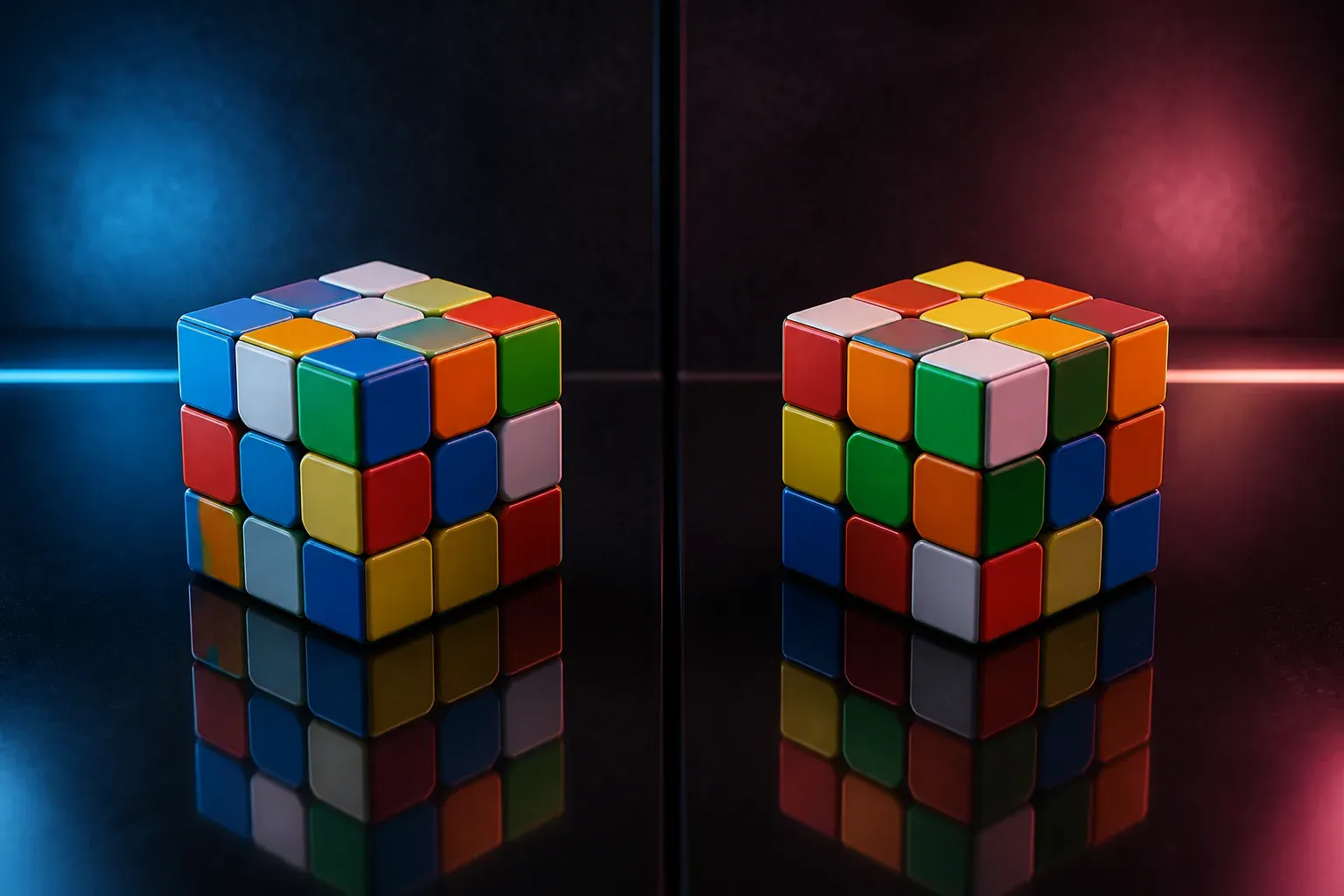
To become color neutral, add one new cross color at a time, practice it until your cross and F2L feel familiar again, then expand your choices. During inspection, choose the color with the clearest useful start instead of searching all six colors for perfection.
On this pageWhat color neutrality changes
Color neutrality is the ability to begin a 3x3 solve on any cross color. It is not a requirement for getting faster, and it is not a promise that every scramble will become easier. It is a choice to give yourself more possible starts during inspection. The useful question is not whether full color neutrality sounds advanced. It is whether you can add colors without losing the planning habits that already make your solves consistent.
The safest transition is gradual. Keep one familiar cross color as an anchor, deliberately train one new color, and judge progress by how calmly you can identify pieces, plan a short cross, and start F2L. A slower average during the transition is normal practice feedback, not proof that the new color is a mistake. The goal is to make each added orientation feel ordinary before adding more decisions.
What color neutrality changes
A one-color solver begins every inspection with the same bottom center and searches for that color's four cross edges. A color-neutral solver can evaluate several starting colors, then build the cross on the one that gives the best usable opening. That extra option can reveal an easy cross or a first pair worth tracking, but it also introduces a decision. If you spend all of inspection comparing six possibilities, the choice can erase the benefit.
Think of color neutrality as a recognition skill, not a memorization contest. You need to recognize where the relevant cross edges are, understand their relationship to the center you selected, and keep the F2L colors oriented in your head. At first, this feels slower because your visual cues have changed. With focused repetitions, the color becomes less important than the cross pattern and the pieces that will remain visible after it.
Decide whether to make the switch now
Start when your current cross is dependable enough that you can notice what is changing. You do not need a particular average. You do need a repeatable routine: identify cross edges, make a simple plan, execute without panicking, and enter F2L with a usable view of the cube. If every solve still requires you to rediscover basic cross pieces, strengthen that routine first. Adding colors to an unstable process makes it harder to tell what needs work.
A good reason to switch is curiosity about better starts, enjoyment of the challenge, or a recurring feeling that your fixed color produces awkward crosses. A poor reason is pressure to copy a faster cuber. Full neutrality is optional. Some solvers prefer one or two colors because the faster decision lets them plan further ahead. Your practice should keep the option that produces clearer, more controlled solves for you.
Add colors with a small practice cycle
Begin with one additional cross color for a whole short session. Before starting each solve, place that chosen center on the bottom even if your familiar color looks tempting. Spend the first few solves slowly locating the four cross edges and naming the order in which you expect to solve them. Then do relaxed untimed solves until you can complete the cross without stopping to re-check the color scheme. This isolates the new recognition task instead of mixing it with a six-color selection problem.
Next, use a compact timed set: for example, five solves on the new color followed by five solves on your familiar color. Do not compare individual lucky times. Compare what you can observe: how often you knew the cross before starting, how often you stopped after cross, and whether you could locate an early F2L pair. Write one sentence after the set, such as 'orange cross: lost the first pair after the third edge.' That note gives the next session a specific job.
When the new color no longer feels like a special drill, alternate the two colors across a session. Only then add a third color. There is no deadline. A gradual sequence lets you preserve confidence in your existing solves and makes a bad habit easy to spot. If you repeatedly lose orientation after the cross, return to single-color drills for a few sessions rather than forcing full neutrality before the visual map is ready.
Choose a cross color without wasting inspection
Use a quick filter rather than a six-way optimization problem. First notice whether any color has several cross edges already oriented or clearly positioned. Pick the most promising one, estimate a simple cross, and check whether the opening leaves a visible first pair. If the answer is clear, commit. If two colors look similar, choose the one you can explain faster. A workable cross planned early is more useful than a theoretical best cross found after inspection has nearly ended.
For competition practice, keep the rule boundary separate from the strategy. The WCA allows you to inspect the puzzle and place it on the mat in any orientation, but it also requires the solve to begin within the inspection limit. Do not make a new color choice by turning the cube during inspection. Use only visual planning, place the cube down in the chosen orientation, and start with the same calm routine you use on your familiar color.
Measure the transition, not just the average
Averages matter, but they lag behind recognition changes. Track three simple signals for each new color: planned cross rate, first-pair awareness, and post-cross pauses. Planned cross rate asks whether you knew a sequence before starting. First-pair awareness asks whether you could identify at least one likely pair while finishing inspection. Post-cross pauses show whether the new orientation is disrupting your F2L map. These signals point to the precise skill to repeat next time.
Keep normal solves in the week so the transition does not become your entire practice identity. One short color-neutral block, one focused cross-planning block, and one ordinary timed average can coexist. If your baseline solves become tense, reduce the number of new-color solves and rebuild with slower repetitions. Consistency is a better target than forcing every scramble into a new orientation immediately.
Avoid the common transition traps
The first trap is changing all six colors at once. That produces too many unfamiliar choices, so your inspection time disappears before you have a cross. The second is treating every slower solve as failure. A new visual system needs repetitions. The third is waiting for the perfect cross. If your selection process feels frantic, cap it at two colors for a while and commit earlier. The final trap is forgetting the next phase: an easy cross is not automatically a good start if it leaves you blind to F2L.
Color neutrality works best when it gives you more calm choices, not more things to calculate. Add a color, make the cross routine familiar, and only expand when you can still inspect with purpose. Whether you stop at two colors or eventually use all six, the durable outcome is the same: you can choose a start deliberately and continue the solve with control.
Continue the learning path
Get faster at 3x3
Measure one solve, identify the slowest phase, and train that skill before chasing raw TPS.
Open this topic clusterTurn this into practice
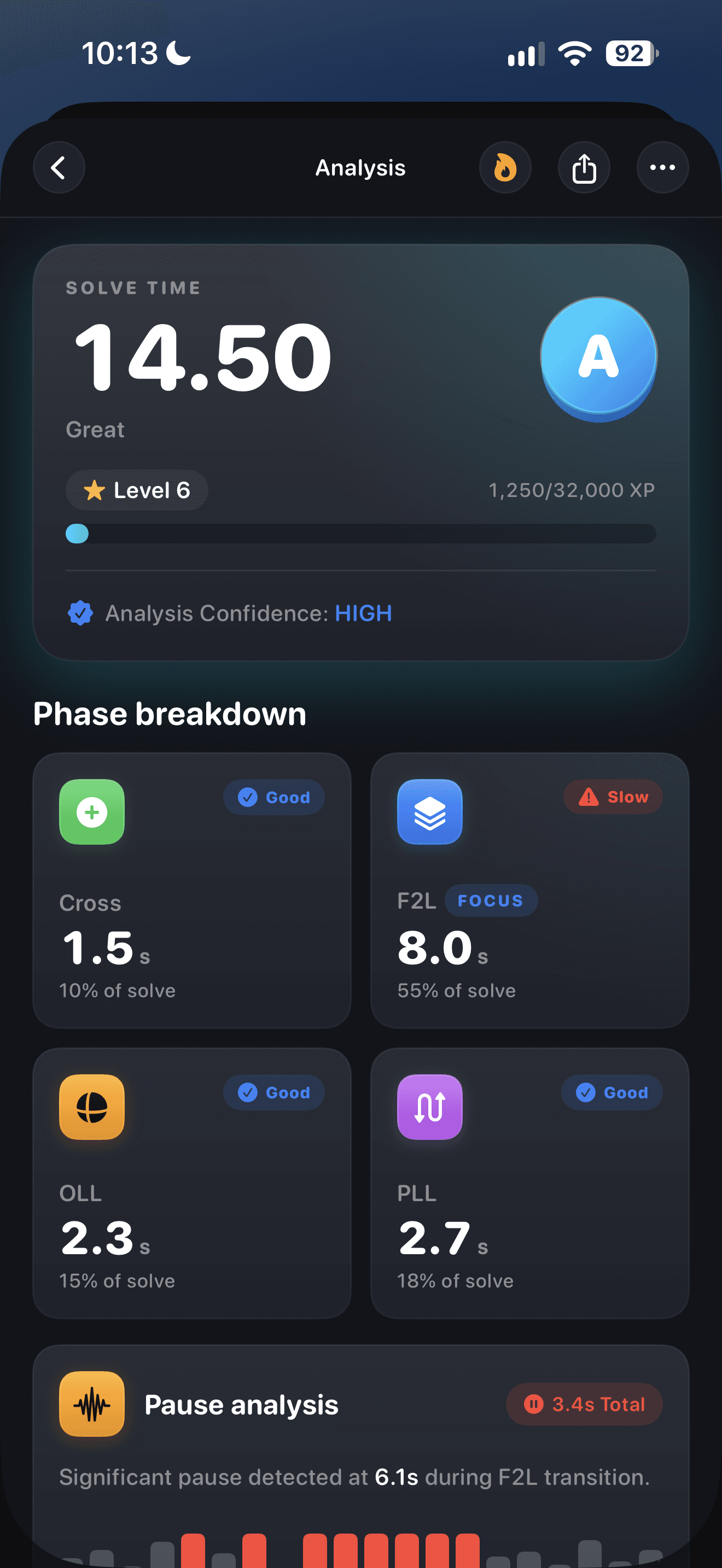
CuberPal combines a WCA-style timer, AI solve analysis, CFOP lessons, algorithm catalogues, spaced repetition, and a camera cube solver so speedcubing advice becomes a daily training loop.
Frequently asked questions
Do I need to be color neutral to get faster?
No. Color neutrality is optional. It can give you more starting choices, but a solver who plans one cross well and enters F2L smoothly can improve quickly. Add colors only when the transition is a useful practice goal rather than a distraction.
Should I learn all six cross colors at once?
Usually no. Train one unfamiliar color until locating cross edges and entering F2L feel stable, then alternate it with your familiar color. Add another color only when the previous choice no longer consumes your inspection.
How do I pick a color during inspection?
Scan quickly for a color with a clear, useful cross and enough time to plan it. If multiple choices look similar, commit to the one you understand sooner instead of spending the whole inspection seeking a perfect solution.
Sources and fact checks
- [1]World Cube Association Regulations — Supports the competition guidance: inspection is allowed, the puzzle may be placed in any orientation, and the solve must start within the stated inspection limits.
- [2]CubeSkills: Colour Neutrality — Supports the definition of color neutrality, the tradeoff between more cross choices and decision time, and focused single-color practice before full neutrality.
- [3]CubeSkills: Colour Neutrality Part 2 — Supports the inspection advice to scan for promising cross pieces, choose an easy cross pragmatically, and avoid over-searching for an optimal color.