Speedcubing Guides

Practical, no-fluff guides to getting faster: technique, algorithms, training systems, and the tools that make them stick. Written by the team behind CuberPal, the AI speedcubing coach for iOS.
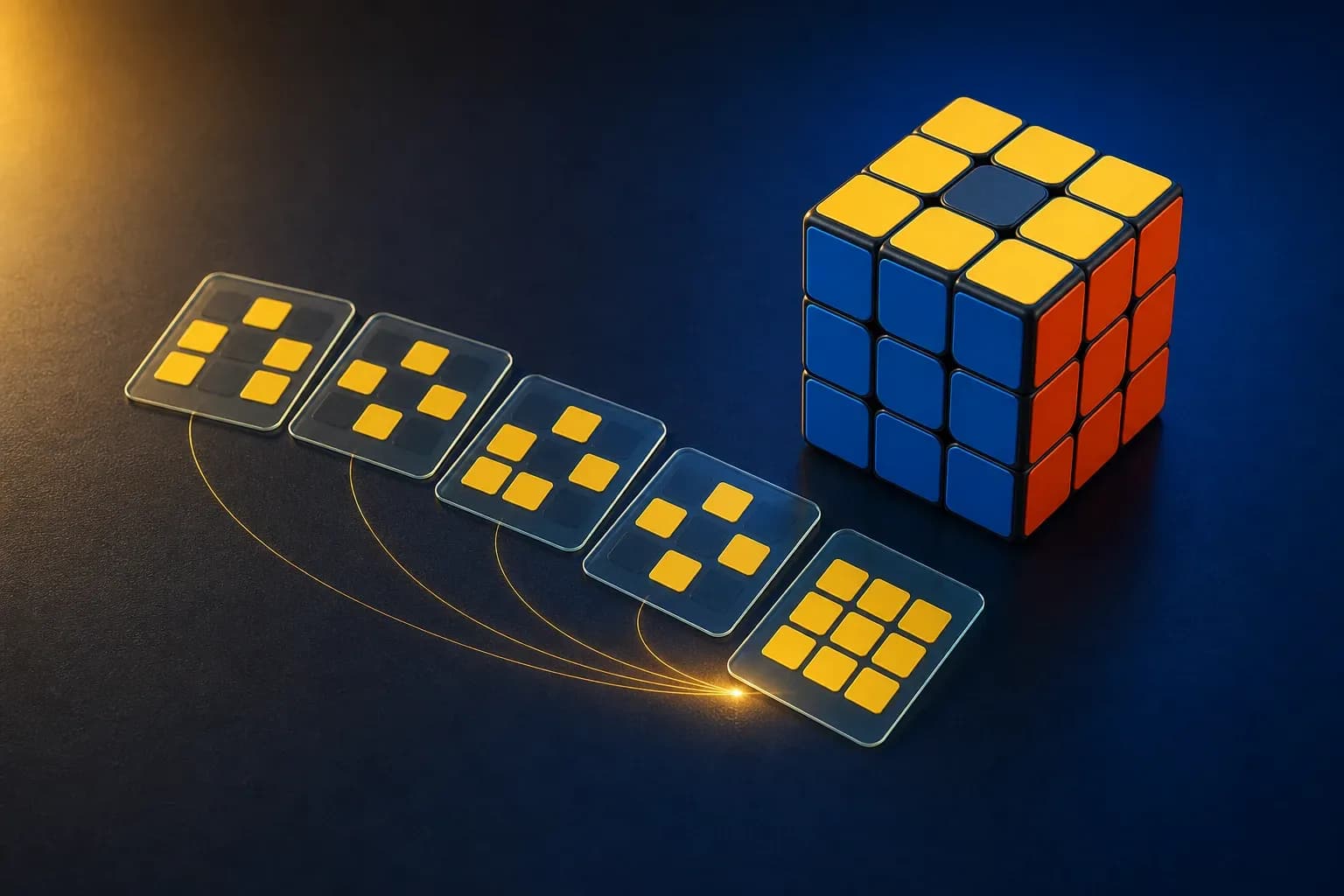
A scrambled 3x3 speed cube followed by translucent randomized cube-state tiles on a dark practice desk.
Editorial image source: Generated with OpenAI built-in image generation for CuberPal editorial use; reviewed and optimized by CuberPal.
Practice

How to Use a 3x3 Scramble Generator for Better Practice

Use a 3x3 scramble generator for fair, repeatable practice, timer averages, inspection drills, and solve analysis with fresh cube states.

A 3x3 speed cube surrounded by violet diagnostic arcs, phase tiles, and a highlighted practice path.
Editorial image source: Generated with OpenAI built-in image generation for CuberPal editorial use; reviewed and optimized by CuberPal.
Coaching

How an AI Speedcubing Coach Can Improve Your 3x3 Practice

Learn what an AI speedcubing coach can help with: identify weak phases, build focused drills, and turn your 3x3 solves into an actionable practice plan.

A 3x3 cube beside recognition tiles moving around a looping algorithm-practice track.
Editorial image source: Generated with OpenAI built-in image generation for CuberPal editorial use; reviewed and optimized by CuberPal.
Algorithms

How to Use a Rubik's Cube Algorithm Trainer Without Forgetting Cases

Use a Rubik's Cube algorithm trainer to learn OLL, PLL, COLL, and ZBLL with recognition practice, reliable execution, and spaced repetition instead of cramming.

A scrambled 3x3 cube beside four phase columns and a waveform with one highlighted weak point.
Editorial image source: Generated with OpenAI built-in image generation for CuberPal editorial use; reviewed and optimized by CuberPal.
Coaching

How to Analyze a Rubik's Cube Solve and Find Your Next Drill

Learn how to analyze a Rubik's Cube solve by phase, pauses, rotations, and recognition so each practice session targets the reason your 3x3 average is stuck.

A scrambled speed cube beside an unbranded practice timer with abstract progress lights.
Editorial image source: Generated with OpenAI built-in image generation for CuberPal editorial use.
Tools

The Best Cube Timer App for iPhone

Choose a cube timer app by comparing WCA-style inspection, ao5/ao12/ao100, multi-event support, offline timing, and coaching features.

A scrambled 3x3 cube beside three ascending blue and green learning blocks for beginner practice.
Editorial image source: Generated with OpenAI built-in image generation for CuberPal editorial use; reviewed and optimized by CuberPal.
Learning

Best Rubik's Cube App for Beginners

A practical guide to choosing a beginner cubing app for a first solve, independent practice, timing, and the transition to CFOP.

A 3x3 speed cube at an evenly balanced fork between two distinct abstract solving paths.
Editorial image source: Generated with OpenAI built-in image generation for CuberPal editorial use; reviewed and optimized by CuberPal.
Learning

CFOP vs Roux

CFOP vs Roux for 3x3 speedcubing: compare learning curve, algorithms, move count, lookahead, one-handed solving, and which method beginners should choose.

A top-down 3x3 cube encircled by four glowing cross-edge markers during pre-solve inspection.
Editorial image source: Generated with OpenAI built-in image generation for CuberPal editorial use; reviewed and optimized by CuberPal.
Technique

How to Plan the Cross During Inspection

Learn how to use 15-second inspection to plan the full cross: choose a color, track four edges, solve in 8 moves or fewer, and start F2L without a pause.

A 3x3 cube with one F2L piece highlighted and a translucent next-pair path extending behind it.
Editorial image source: Generated with OpenAI built-in image generation for CuberPal editorial use; reviewed and optimized by CuberPal.
Technique

How to Improve F2L Lookahead

Learn F2L lookahead with slow solves, targeted drills, and AI pause detection so you can find the next pair while finishing the current one.

A 3x3 speed cube moving along a rising sequence of four illuminated performance checkpoints.
Editorial image source: Generated with OpenAI built-in image generation for CuberPal editorial use; reviewed and optimized by CuberPal.
Improvement

How to Get Faster at Cubing

Stuck at the same Rubik's Cube times? Learn exactly how to get faster at cubing: find where you lose time, fix F2L pauses, and train with AI solve analysis.

A competition-ready 3x3 cube and blank timing pad facing four phase lanes and a glowing goal line.
Editorial image source: Generated with OpenAI built-in image generation for CuberPal editorial use; reviewed and optimized by CuberPal.
Improvement

How to Get Sub-20 on the 3x3

A phase-by-phase sub-20 plan built around Cross inspection, F2L pause diagnosis, dependable last-layer cases, and measured practice.

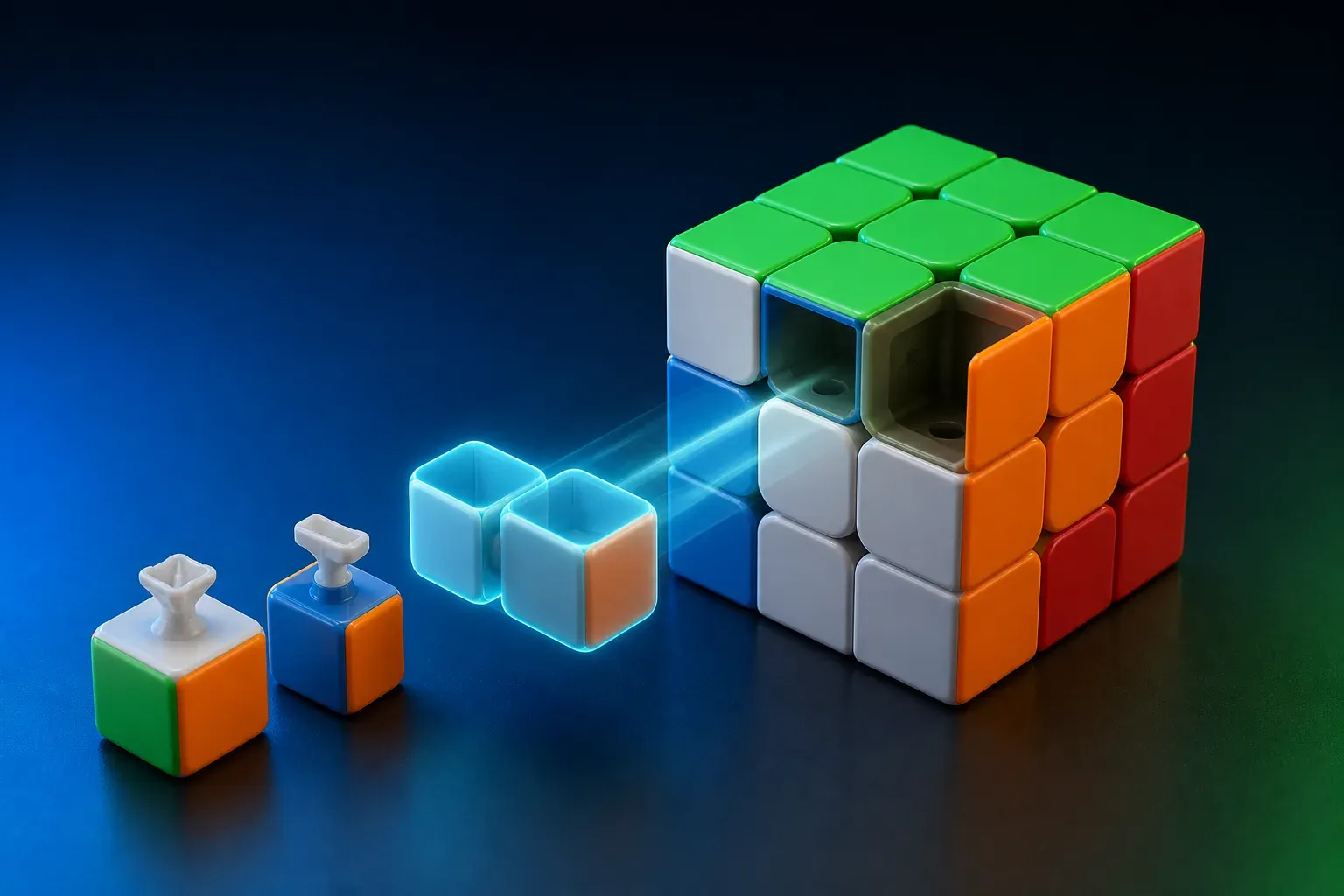
Corner and edge piece forms aligning into a pair before entering an open first-two-layers slot.
Editorial image source: Generated with OpenAI built-in image generation for CuberPal editorial use; reviewed and optimized by CuberPal.
Technique

How to Learn F2L

Learning F2L for CFOP? Start with intuitive corner-edge pairing, simple inserts, slow solves, and only add algorithms after the basic cases make sense.

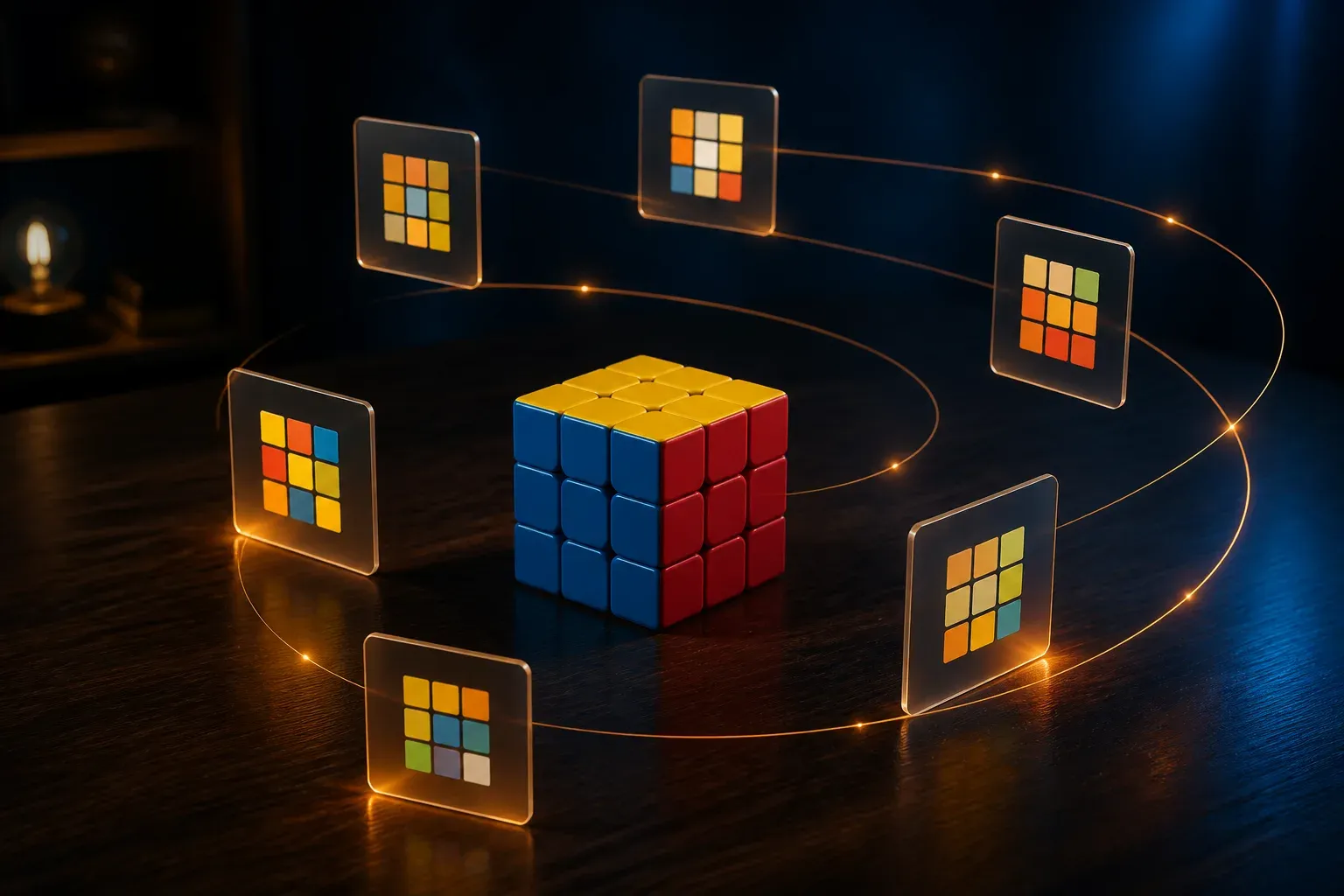
A 3x3 cube encircled by repeating recognition cards on a widening spaced-repetition orbit.
Editorial image source: Generated with OpenAI built-in image generation for CuberPal editorial use; reviewed and optimized by CuberPal.
Algorithms

How to Memorize Rubik's Cube Algorithms

Use chunking, visual recognition, fingertricks, and spaced repetition to memorize Rubik's Cube algorithms and retain them for real solves.

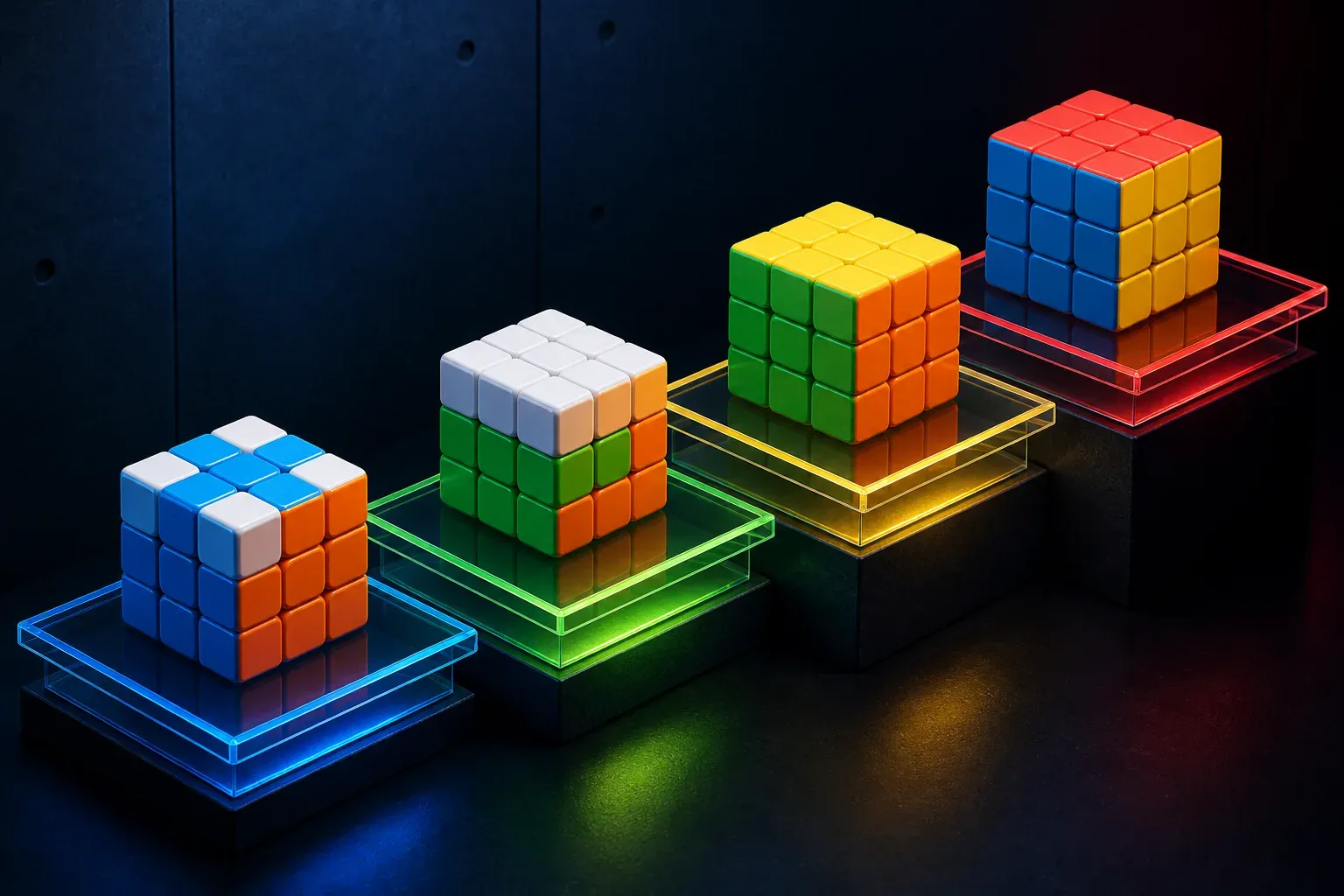
Four 3x3 cube stages ascending through blue, green, yellow, and red CFOP learning platforms.
Editorial image source: Generated with OpenAI built-in image generation for CuberPal editorial use; reviewed and optimized by CuberPal.
Learning

How to Learn the CFOP Method

A practical CFOP roadmap from a reliable beginner solve to Cross, intuitive F2L, two-look last layer, full PLL, and full OLL.

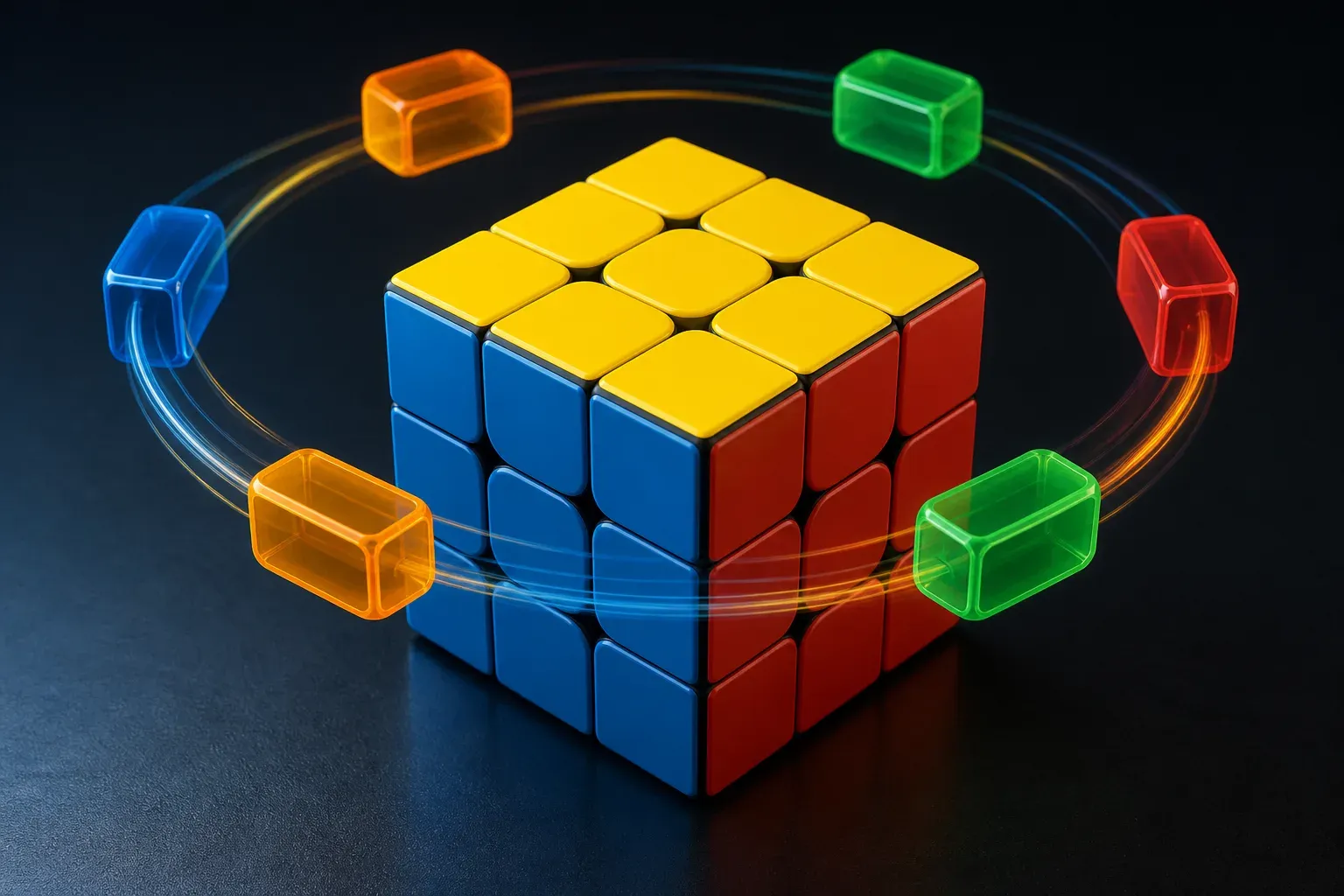
A yellow-top 3x3 cube with colored last-layer pieces traveling around a clean permutation orbit.
Editorial image source: Generated with OpenAI built-in image generation for CuberPal editorial use; reviewed and optimized by CuberPal.
Algorithms

How to Learn Full PLL

Full PLL is the highest-value algorithm set in cubing — 21 algorithms used in every solve. Learn them in the right order and keep them with spaced repetition.

A standard 3x3 cube beside five square-tile OLL pattern cards converging on a full yellow face.
Editorial image source: Generated with OpenAI built-in image generation for CuberPal editorial use; reviewed and optimized by CuberPal.
Algorithms

How to Learn OLL (Without Drowning in 57 Cases)

OLL has 57 cases, but you only need 10 to start. Learn 2-look OLL first, then finish full OLL in groups — with 3D previews and spaced repetition drills.

A 3x3 cube at the center of seven dense, orderly clusters of advanced last-layer cases.
Editorial image source: Generated with OpenAI built-in image generation for CuberPal editorial use; reviewed and optimized by CuberPal.
Algorithms

How to Learn ZBLL (And Whether You Should)

ZBLL solves the entire last layer in one algorithm — 493 cases. Who should learn it, which sets to start with, and how spaced repetition makes it possible.

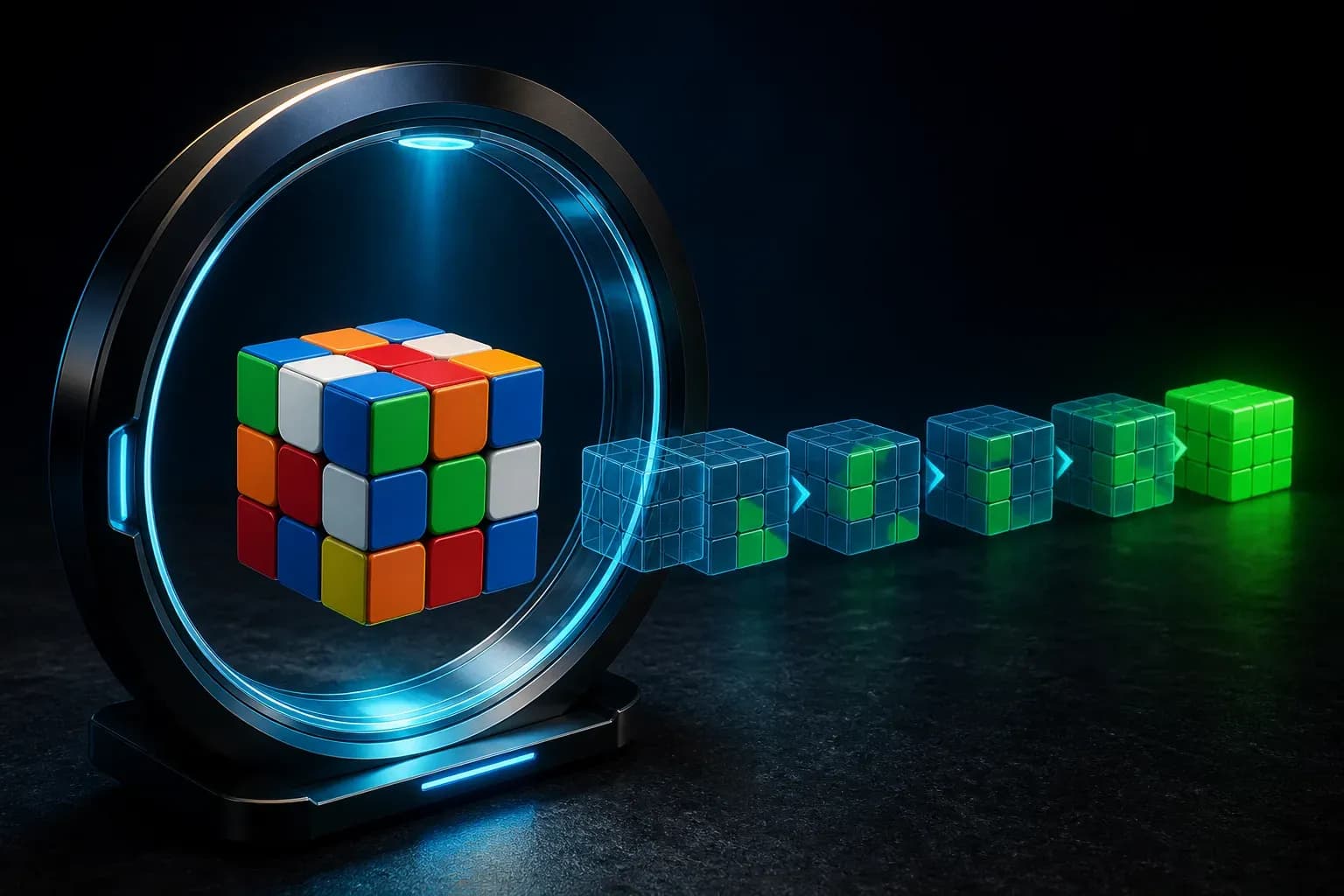
A scrambled 3x3 cube inside an optical scan ring followed by translucent solving stages.
Editorial image source: Generated with OpenAI built-in image generation for CuberPal editorial use; reviewed and optimized by CuberPal.
Tools

Rubik's Cube Solver: Scan Any Scramble, Solve It Step by Step

Scan a scrambled cube with your iPhone camera and follow a step-by-step solution. Learn how camera cube solvers work and move from solved to solving.

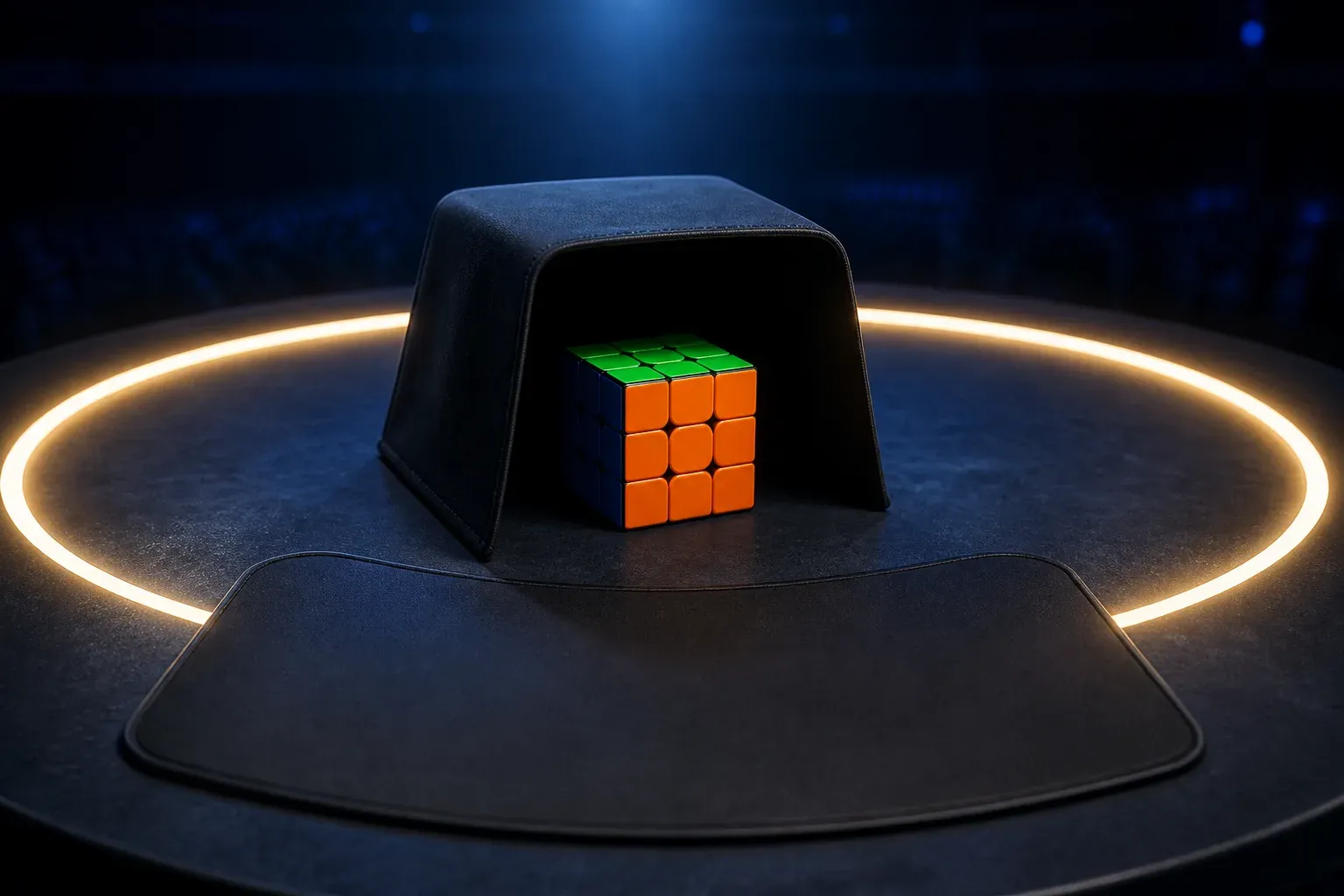
A covered 3x3 competition cube, blank timing mat, and unnumbered inspection halo under arena light.
Editorial image source: Generated with OpenAI built-in image generation for CuberPal editorial use; reviewed and optimized by CuberPal.
Basics

WCA Inspection Rules Explained

Learn the WCA inspection rules for speedcubing: 15 seconds, +2 penalties, DNFs, when timing starts, and how to practice inspection at home.

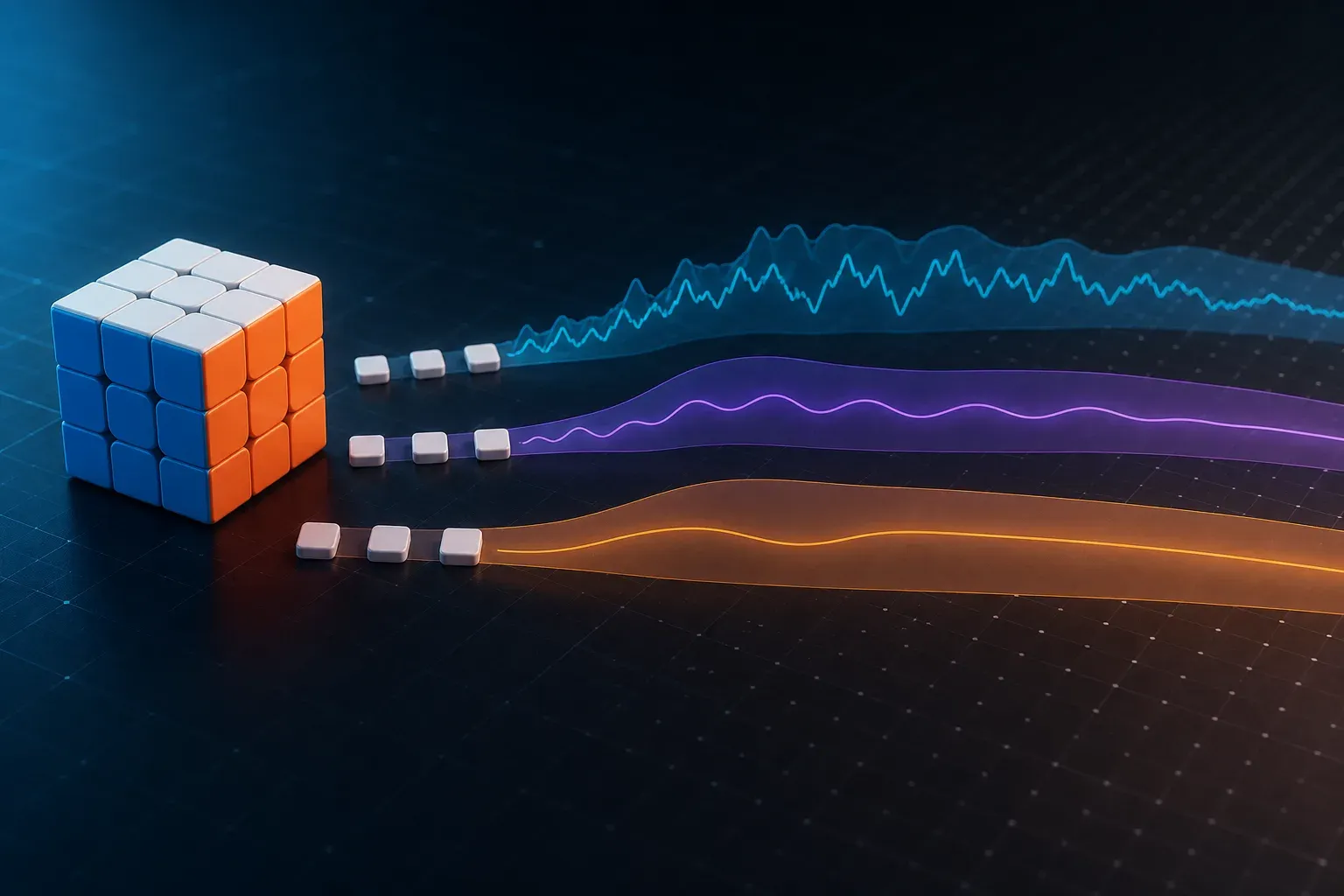
A 3x3 cube feeding solve markers into three increasingly smooth rolling-average ribbons.
Editorial image source: Generated with OpenAI built-in image generation for CuberPal editorial use; reviewed and optimized by CuberPal.
Basics

What Do Ao5, Ao12, and Ao100 Mean in Cubing?

Learn what ao5, ao12, and ao100 mean in speedcubing, how trimmed averages work, why averages matter, and how to track yours accurately.

Every guide pairs with a feature in the app — analysis, drills, or lessons.

Download CuberPal