
How Many F2L Algorithms Do You Need?
Quick answer
You need zero F2L algorithms to start. Intuitive F2L teaches you to pair a corner and edge and insert them without a case sheet. The common 41-case list is a reference for standard last-slot situations, not a beginner requirement. Build reliable intuitive pairs first, then add an algorithm only when one repeated case causes a pause, rotation, or awkward recovery.
On this pageWhy the answer is zero at the start
The phrase ‘41 F2L algorithms’ can make a new CFOP learner think F2L is another giant memorization project. It is not. F2L means solving the first two layers by making four matching corner-edge pairs and placing each pair in its slot. You can learn that job from piece relationships instead of from 41 sequences. The 41 number describes a conventional catalog of last-slot positions, useful when you want to compare solutions or optimize a stubborn case. It does not describe the minimum knowledge needed to solve a cube with F2L.
Why the answer is zero at the start
Start by keeping your cross on the bottom, finding a corner and its matching edge, and identifying the slot from their side colors. Bring the two pieces where you can see them, pair them without breaking the cross, then insert the pair. That is intuitive F2L. The aim is not to discover the mathematically shortest sequence on every solve. The aim is to understand what each setup does well enough that you can recover when the pieces begin in an unfamiliar position. J Perm’s CFOP and F2L lessons explicitly present intuitive F2L as a path that does not require algorithms before optimization.
This approach is slower for a few awkward positions at first, but it gives every later shortcut a meaning. A memorized sequence is easier to keep when you can see which pair position it improves and where the pieces will finish. If you immediately collect algorithms, it is easy to freeze when a pair is mirrored, behind the cube, or partly trapped. If you understand the pair, you still have a route to a safe solve.
What the 41 standard cases actually mean
The conventional 41-case count is a way to group ordinary last-slot F2L positions after you have solved the cross and the other three pairs. It is not a rule that every solver must memorize one move sequence per label. Speedsolving.com lists CFOP F2L as ranging from zero to 41 algorithms, while its F2L reference distinguishes the 41 last-slot cases from larger advanced collections. The count therefore gives you a map of recognizable positions, not a deadline for your flashcards.
Even within that map, a single case can have several workable solutions. The best choice depends on which slots are open, which pairs you have already solved, your preferred grip, and whether the next pair stays visible. A solution that is one move shorter but forces a big regrip may be worse for your current turning. Treat a case sheet as a comparison tool: use it to understand a cleaner option after you already know how to solve the position, rather than as a replacement for recognition.
When to add your first F2L algorithm
Add an algorithm because it fixes evidence you can repeat, not because it is numbered on a list. A good first target is a case that you recognize immediately but solve with a long setup, an automatic cube rotation, or a pause while you search for a pair. Do a small set of slow solves, write down the position in plain language, and compare your normal solution with one alternative. Keep the alternative only if you can recall it and execute it cleanly on another day.
For example, a learner who repeatedly sees a corner and edge joined incorrectly can first use an intuitive separation and rebuild. If the same setup keeps costing time after that recovery is dependable, one compact solution may be worth learning. Do not add three mirrored versions automatically. Learn one orientation, understand how you would mirror or rotate it when needed, and test whether it survives normal solves. Recognition, execution, and recall all need to be present before a new case helps your average.
A practical progression that avoids cramming
Use stages that match what you can observe in your own solves. First, make all four intuitive pairs without returning to the beginner layer-by-layer method. Next, reduce deliberate pauses by practicing pair recognition with the cross on the bottom. Then choose one or two cases that repeatedly interrupt your flow. Only after those additions feel automatic should you explore more case-specific options, back-slot comfort, or advanced F2L ideas. This sequence follows the same principle in J Perm’s F2L progression: establish intuitive understanding before turning a large algorithm document into a study plan.
- A focused practice session can be simple:
- Solve ten times slowly and name the corner-edge pair before you move it.
- Choose one repeated pause, compare one alternative solution, and return to normal solves.
- Review the next session before adding another case; if the new move is gone, keep practicing it instead of expanding the list.
Measure the pause, not just the case count
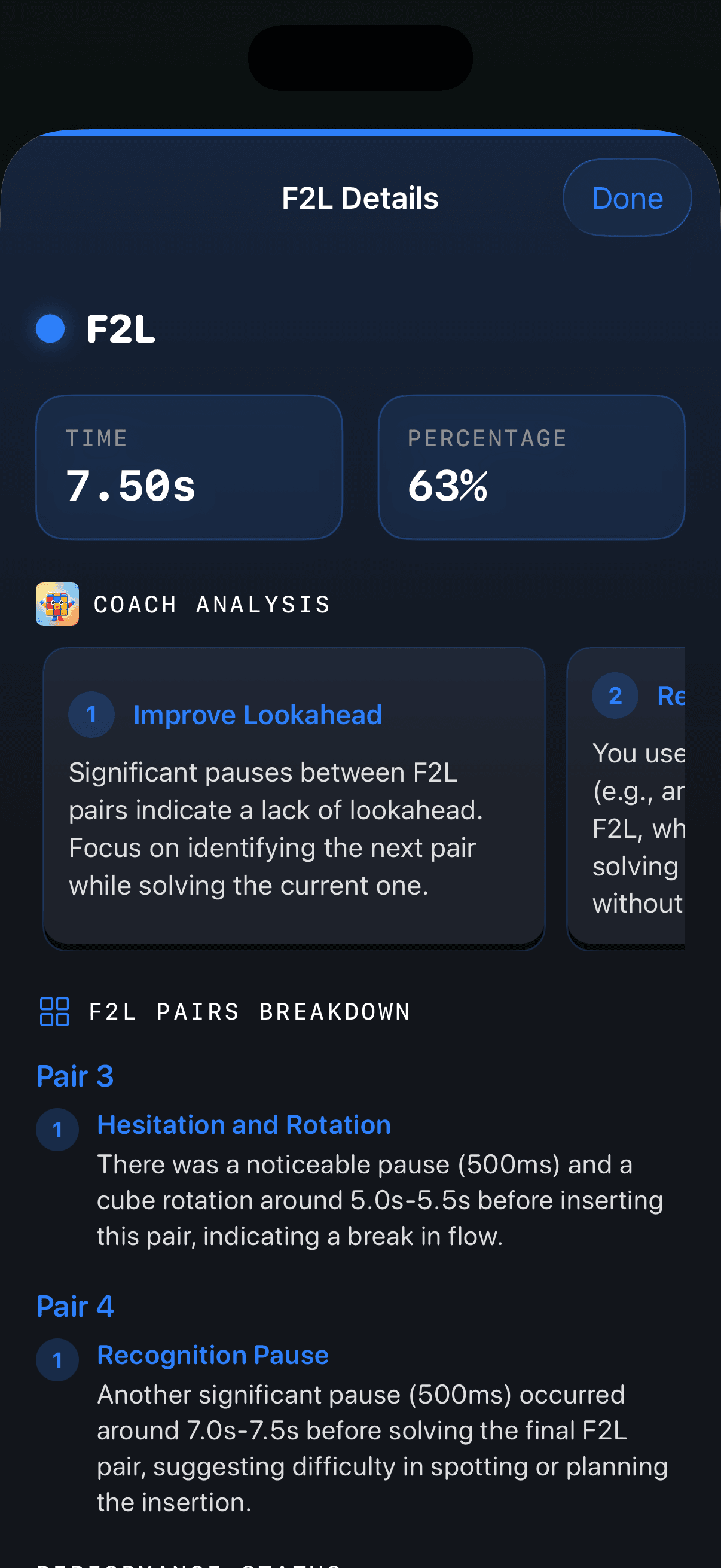
Your number of remembered F2L algorithms is not a score by itself. A smaller set you can recognize without pausing is more valuable than a long list that you only remember from a diagram. Use slow solves, video, or pair-by-pair review to separate a recognition problem from an execution problem. The CuberPal F2L analysis view is designed to show pair-by-pair timing and improvement details, so it can help you notice which part of a solve deserves a drill. Start with the specific pattern you observe, then use the case list only when it offers a better answer to that pattern.
If you are still learning F2L, the right total is usually zero extra algorithms today. Learn the structure, make the pairs readable, and protect your solved slots. If you already solve intuitively but repeatedly stall on the same position, add one deliberate shortcut and verify that it improves an ordinary practice set. The 41 cases will still be there when each one has a clear reason to earn a place in your solves.
Continue the learning path
Learn CFOP
Build intuitive F2L before adding a large number of algorithms.
Open this topic clusterTurn this into practice
CuberPal combines a WCA-style timer, AI solve analysis, CFOP lessons, algorithm catalogues, spaced repetition, and a camera cube solver so speedcubing advice becomes a daily training loop.
Frequently asked questions
Do I need all 41 F2L algorithms for sub-20?
No. Intuitive F2L is a valid foundation, and your priority should be recognizing pairs quickly, avoiding long pauses, and protecting solved slots. Add individual algorithms only when you can identify a repeatable weakness they improve.
Should I learn F2L algorithms before full PLL?
Usually, no. Build intuitive F2L first and follow a clear CFOP progression. If one F2L case repeatedly causes a large pause, learn that targeted solution while you continue broader last-layer practice.
How do I know which F2L case to learn first?
Choose a case you see often and already recognize, but solve with an awkward setup, unnecessary rotation, or visible pause. Compare one alternative and keep it only after it works reliably in regular solves.
Sources and fact checks
- [1]J Perm: CFOP Method - F2L — Supports the recommendation to learn intuitive F2L before optimization and the distinction between intuitive solutions and larger advanced F2L collections.
- [2]Speedsolving.com Wiki: First Two Layers — Supports the conventional 41 last-slot F2L-case count, the zero-to-41 CFOP F2L range, and the distinction between standard and advanced F2L.